



 English
 Deutsch
 Français
 Español
 Nederlands
Karhu
Like page


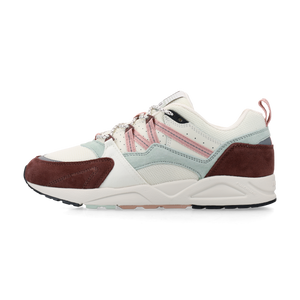
Karhu combines more than 100 years of Finnish sports heritage with retro-running silhouettes that today work primarily as lifestyle sneakers. At 43einhalb, five models take centre stage: the Karhu Fusion 2.0, Aria 95, Legacy 96, Fusion XT, and Mestari. From slim 1970s runners to more technical 1990s designs, they represent different chapters of Karhu’s running history – connected by distinctive materials, unique colourways, and the signature M logo.
The most important Karhu sneakers compared
Karhu’s lifestyle models come from different phases of the brand’s sports history. The Mestari represents a slim 1970s running look, while the Aria 95, Fusion 2.0, and Legacy 96 lean much more heavily into the technical aesthetic of the 1990s. The Fusion XT adds another angle by drawing on Karhu’s cross-training heritage.
| Model | Heritage | Silhouette | Character |
|---|---|---|---|
| Karhu Fusion 2.0 | Based on the 1996 Fusion | Chunkier retro runner | Layered / technical / bold |
| Karhu Aria 95 | 1995 | Technical 90s runner | Slimmer / sock-like construction |
| Karhu Legacy 96 | 1996 | Classic 90s runner | Balanced / sporty / versatile |
| Karhu Fusion XT | 1990s cross-training DNA | Substantial training silhouette | Sportier / rugged / unconventional |
| Karhu Mestari | 1976 | Slim retro runner | Clean / lightweight / classic |
Karhu: Finnish sports heritage since 1916
Karhu was founded in Helsinki in 1916 and initially produced sports equipment such as skis, javelins, and discuses. Running shoes followed early on and were worn by successful Finnish athletes. The name Karhu means “bear” in Finnish.
Over the following decades, the brand repeatedly developed its own running technologies. These included a patented Air Cushion construction and later Fulcrum technology, developed together with the University of Jyväskylä.
This technical background forms the foundation of today’s lifestyle collection. Many current Karhu sneakers are not simply retro-inspired designs, but direct references to real performance models and design ideas from the brand’s own archive.
Karhu Fusion 2.0: the bold 90s silhouette
The Karhu Fusion 2.0 is based on the original Fusion from 1996, which was one of the brand’s key performance running shoes at the time. For the reissue, Karhu also worked with the original designer of the model.
Its layered upper, different material panels, and substantial running silhouette are especially characteristic. Depending on the colourway, Karhu combines materials such as mesh, suede, leather, nylon, or ripstop with reflective details.
This makes the Fusion 2.0 the boldest option among Karhu’s classic retro runners. It works particularly well with straight, relaxed, and wide-leg trousers that balance the volume of the shoe.
Karhu Aria 95: technical running DNA with a mono-sock construction
The Karhu Aria 95 revisits a performance runner from 1995. Its most distinctive feature is the mono-tongue or sock-like construction, which clearly separates it from other models in the Karhu line-up.
The Aria 95 feels more technical than the Mestari, but slightly slimmer and more compact than the Fusion 2.0. Layered overlays, mesh, and a typical 90s sole construction give it a clear retro-running character.
This makes the Aria 95 especially interesting if you want a technical 90s runner that has presence without feeling overly bulky.
Karhu Legacy 96: the balanced retro runner
The Karhu Legacy 96 originally appeared in 1996. The performance model combined an Air Cushion zone in the heel with an EVA midsole and a construction designed to support stability.
Visually, the Legacy 96 now sits right between a clean retro runner and more technical 90s models. Mesh, layered panels, and a slightly more substantial midsole add visual depth without making the silhouette feel too heavy.
That makes the Legacy 96 one of the most versatile Karhu models: sportier than the Mestari, more understated than the Fusion 2.0, and easy to combine with denim, chinos, or relaxed trousers.
Karhu Fusion XT: cross-training instead of classic running
The Karhu Fusion XT differs conceptually from the classic running models. Its inspiration comes from Karhu’s cross-training shoes of the mid-1990s – hence the “XT” in the name.
The silhouette feels more substantial and more like a classic training shoe from that era. This gives the Fusion XT a different shape within the Karhu range and makes it a strong choice if you want 90s sportswear without the typical retro-runner look.
Karhu Mestari: running design from the 1970s
The Karhu Mestari represents a much earlier chapter in running history. The model debuted in 1976 and was one of the first Karhu shoes to feature the brand’s patented Air Cushion midsole.
Compared with the Fusion 2.0, Aria 95, and Legacy 96, its construction is significantly more minimal. A lower, slimmer silhouette and classic combinations of mesh, suede, and leather create a look that strongly references 1970s running shoes.
This makes the Mestari the obvious choice if you prefer a cleaner retro sneaker. Straight denim, chinos, and simple trousers work particularly well with its lower-profile shape.
Fusion 2.0, Aria 95 or Legacy 96: What are the differences?
All three models reference 1990s running design, but their proportions are noticeably different. The Fusion 2.0 is the most substantial and feels especially bold because of its many layers.
The Aria 95 is more compact and technical. Its mono-sock construction also gives it a unique character. The Legacy 96 sits visually between the two, making it particularly versatile.
In simple terms: Fusion 2.0 for more volume, Aria 95 for a technical 90s look, and Legacy 96 for the most balanced retro-runner silhouette.
What does the M on Karhu sneakers mean?
The large M is one of Karhu’s key visual signatures. The brand registered the symbol in 1960. It stands for “Mestari”, the Finnish word for “champion”.
Over the decades, the M has appeared in different shapes and sizes. On today’s lifestyle models, it remains one of the details that makes a Karhu sneaker easy to recognise even without the full brand name.
Karhu and the three stripes
One unusual chapter in Karhu’s history concerns the three-stripe trademark. Karhu had already used the motif on early sports shoes and later sold the trademark after the 1952 Helsinki Olympics to another sports brand.
Karhu subsequently established the M symbol instead, which continues to define the brand today. The story underlines how long Karhu has been part of European sports and running culture.
Which Karhu sneaker is right for you?
If you want a bold retro runner with plenty of layering and a more substantial shape, the Fusion 2.0 is the obvious starting point. The Aria 95 is more technical and slightly more compact, while the Legacy 96 feels especially balanced and versatile.
The Fusion XT is the alternative if you want to lean more towards 90s training rather than classic running. The Mestari, by contrast, is the cleanest and slimmest option and brings a much stronger 1970s character.
Karhu colourways and materials
Colour plays an important role at Karhu. Many models combine muted base tones with unexpected accent colours. This often makes even the more technical retro runners feel less aggressive and easier to integrate into everyday outfits.
Material mixing is also a typical part of Karhu’s design language. Depending on the model and colourway, suede, leather, mesh, nylon, ripstop, and other textiles may be used. The exact material composition can therefore vary significantly between individual versions.
You’ll find current Karhu sneakers and new colourways at 43einhalb. Announced releases can also be found in our Coming Soon section.
Frequently asked questions about Karhu sneakers
Is Karhu a Finnish brand?
Yes. Karhu was founded in Helsinki in 1916 and has more than a century of Finnish sports and running heritage.
What does Karhu mean in Finnish?
Karhu means “bear” in Finnish. The company adopted the Karhu name in 1920.
What does the M on Karhu sneakers mean?
The M stands for “Mestari”, the Finnish word for “champion”. Karhu registered the distinctive M symbol in 1960 and continues to use different versions of it on its sneakers today.
What is the difference between the Karhu Fusion 2.0, Aria 95 and Legacy 96?
The Fusion 2.0 is bulkier, the Aria 95 is more technical and compact, and the Legacy 96 is the most balanced. All three reflect different aspects of Karhu’s 1990s running aesthetic.
When was the original Karhu Fusion released?
The Fusion 2.0 is based on the original Karhu Fusion from 1996. The original was one of the brand’s key performance running shoes and was later reinterpreted as the Fusion 2.0.
What is special about the Karhu Aria 95?
The Aria 95 is especially known for its mono-tongue or sock-like construction. This gives the shoe a fit and appearance that clearly differ from many other Karhu retro runners.
What is the Karhu Fusion XT?
The Fusion XT is inspired by Karhu’s cross-training shoes from the mid-1990s. It therefore feels more like a classic training shoe and less like a pure retro runner.
Which Karhu sneaker has the slimmest silhouette?
The Mestari is one of the slimmest and most minimal silhouettes in this selection. Its design comes from the 1970s and feels significantly cleaner than the more layered models from the 1990s.
Are Karhu retro sneakers based on genuine former running shoes?
Many of Karhu’s best-known lifestyle models are based on real performance shoes from the brand’s own archive. Fusion, Aria, Legacy, and Mestari reference genuine chapters of Karhu’s running and sports history.
Are the Karhu sneakers at 43einhalb authentic?
Yes. At 43einhalb, you’ll only find authentic products sourced directly from the manufacturer or through official distribution channels.